
The controversial "Seiko 6319-7040" diver
If you have already read my previous article on spotting fake Seiko watches, you may have learned how to distinguish the counterfeits from the real ones. Some are fairly easy to spot while others need careful scrutiny to determine whether it’s fake or not.
Recently I came across an auction by a well known eBay vintage watch seller from the Philippines and what caught my attention was the fact he described the watch as “controversial”. This popular Power Seller eBay merchant has never peddled fake vintage watches in the past and he would know a fake one from an original Seiko.
However, this particular watch for auction stumped the seller and after looking at photos of his listing I have to admit that the watch stumped even me. The seller couldn’t verify whether this watch was a fake or probably a one-off Seiko model that nobody knew about, so he listed the watch as a “controversial Seiko diver“.
Not soon after, another vintage Seiko diver fitting this description was auctioned by another seller and the subject of this watch was discussed extensively in the Seiko & Citizen Watch Forum.
Even the seasoned forum “Mythbusters” mulled over the authenticity of this so-called 6319-7040 vintage diver. I’m one of those who like participating in conspiracy theories and naturally, this particular subject caught my undivided attention.
A short background on Seiko 6309 divers
Before we go on analyzing this controversial watch, we need to know a little about the history of Seiko’s 6309 divers.
In 1976 Seiko introduced its third generation 6309-704x divers to replace its ageing 6105-811x models which was due to be phased out a year later.
Oh, by the way when I use the “x” in a caseback number (e.g. 704x), it covers all variations of the watch. In other words, it includes both the 6309-7040 and 6309-7049 models which are essentially similar. The last digit denotes the export market the watch was intended – in this case a -7040 is for most overseas countries while a -7049 is specifically for the North American market.
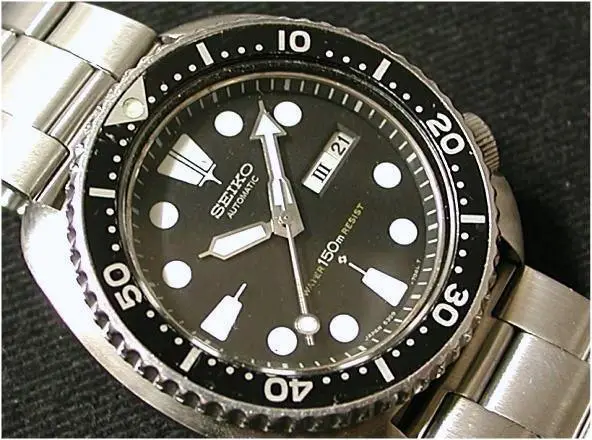
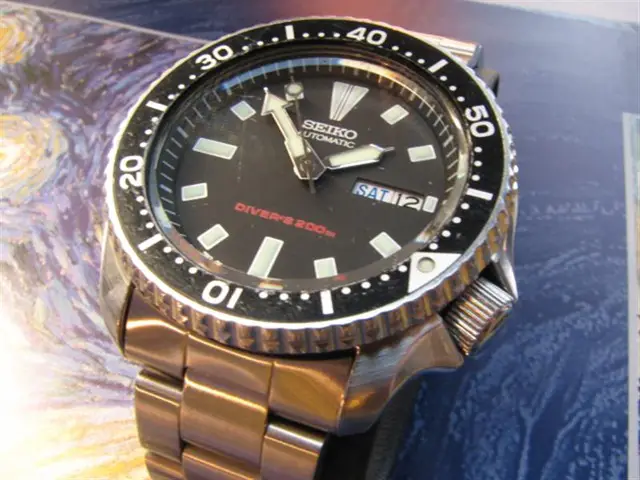
Two popular vintage 6309 caliber divers: the 1st generation 6309-7040 (left) and the 2nd generation 6309-7290 (right)
The 6309-704x is easily identified by its fat cushion styled case (it was in fact, the only other cushion cased Seiko diver other than its predecessor, the 6105-811x), round index markers and the distinctive sword-like cross. Early 6309-704x divers were made at Seiko Japan’s Suwa factory while later batches were assembled in Seiko’s overseas plant in Hong Kong (now part of China).
For some reason Seiko decided to discontinue the cushion case look and its 2nd generation 6309-729x models adopted a slimmer case, almost similar to the contemporary 7s26-002x divers (such as the SKX007) that is being sold today. It also sported all-rectangular hour markers and a V-shaped 12 o’clock index.
By and large, many vintage Seiko enthusiasts prefer the 6309-704x model over the 6309-729x types. My guess is that the 6309-704x feels more comfortable on the wrist due to its expanded case shape and has that very classic vintage Seiko diver look. Another matter is the quality of the dial itself. You can easily find a used 6309-704x with almost pristine looking dials but looking for an equally well preserved 6309-729x dial is a real challenge.
Of course, there is also the ultra-rare orange dialed 6309-729B which is sought after by serious collectors and these fetch handsome prices on the used market. In fact, I know of someone who coughed up USD700 just to own a decent condition, orange 6309-729B! 🙂
Also noteworthy is mentioning the rare and very collectible, Japan market 6306 diver which looks exactly like the ubiquitous 6309-704x diver. The 6306 can be distinguished by its English/Kanji (Japanese) language day calendar and of course, its unique ability to hack the movement (to stop the second hand for time setting and synchronization).
Analysis the controversial 6319-7040 diver
There are several indications that suggest that this “6319-7040” Seiko is not an authentic model.
Let’s have look at the front of the watch first. We’ll begin with looking at the case.

The case follows the cushion cased design of the original 6309-704x divers, which is the trademark of the first generation 6309 divers. I have to admit if this was a replica the shape of the case sure looks like the real thing.
Dial, hands and bezel insert
The dial and hour/minute hands are certainly patterned after the SKX007K model. Strangely enough the second hand is of a design that Seiko has never used whether in the past or current. If this watch was made during the 6309 era, the dial design falls afoul of anachronisms. Seiko only introduced this dial layout in 1996 with the birth of their 7s26-based SKX007K diver. Prior to the SKX007K, Seiko made the 7002-700x divers which, like the 2nd generation 6309-729x models, had rectangular hour markers.
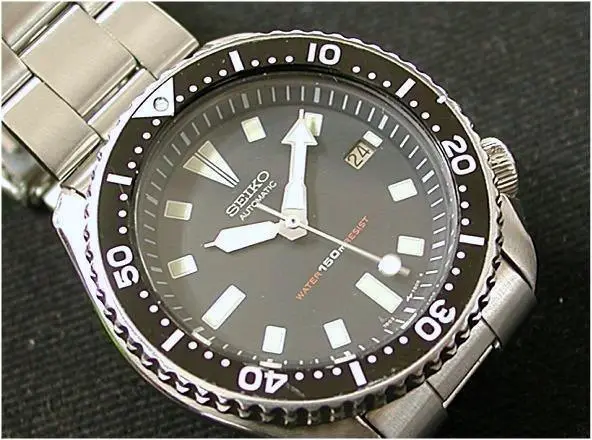
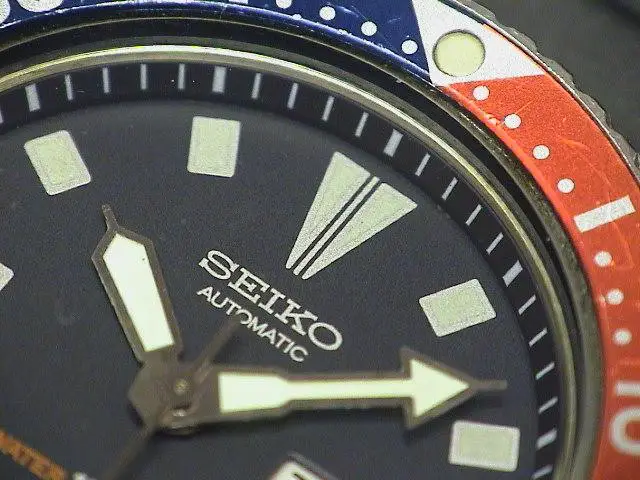
Top: Note the dial index similarities of the 7002-7001 diver (left) and the 6309-729A (right). The very obvious difference is that the 7002 is a date-only watch (no day calendar).
Could the dial had been an experimental, one-off design – a precursor to the SKX007K? Could be, but it doesn’t make any sense to me at all. The bezel insert also doesn’t reflect the standard that Seiko used at the time. 6309 and 7002 divers had a wide triangle marker on the bezel insert with a large lume pip or indicator. This one had a small lume pip, reminiscent of SKX007K divers.
Dial text
During the years of the 6309 and the 7002 divers, Seiko used the standard “Water 150m Resist” description on its watches. The suspicious watch has “Diver’s 150m” instead. Seiko’s automatic divers were rated to 150m water resistance from its early 62 MAS models right to their 1st generation 7002 divers and they never used the format “Diver’s 150m” on the dials.
For the sake of clarity, the exception to this rule would be the Seiko quartz “SQ” divers like the 7548 and H558, including the famous “Arnold Schwarzenegger” H558-5000 analog-digital series – they were marked as “SQ Diver’s 150m” instead of “Water 150m Resist” (thanks to reader Tom Perrine who pointed this out in the comments section), and as you can see below.
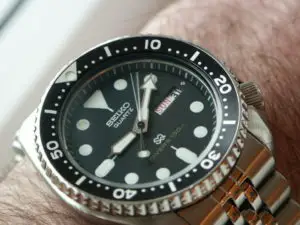


Top: Certain Seiko quartz diver’s watches had “Diver’s 150m” printed on the dial instead, like the 7548-700x above.
It wasn’t until the later phase of the 7002 divers that Seiko upgraded the water resistance of its dive watches from 150m to 200m. Following the change, Seiko introduced the following characteristics:
-
A change from the traditional “Water 150m Resist” mark to “Diver’s 200m”.
-
A uni-directional rotating bezel with 120 graduations instead of 60 clicks.
The 2nd generation 7002 divers were also dubbed the “transitional divers”, in reference to the upgrade from 150 meters’ to 200 meters’ rating. Since then all automatic Seiko dive watches were rated to 200m.
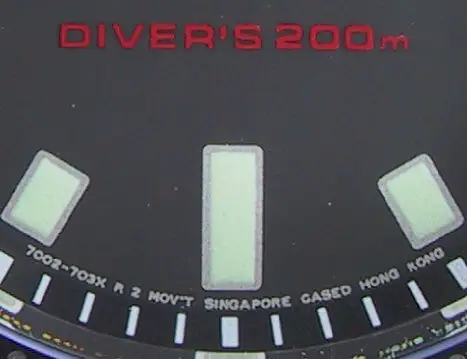
Above: A close up of the 7002 “transitional diver” dial. Note the newly introduced “Diver’s 200m” print back then.
Caseback and markings
Now, let’s have a look at the caseback of this “6319-7040” diver. This is where it gets really interesting! 🙂
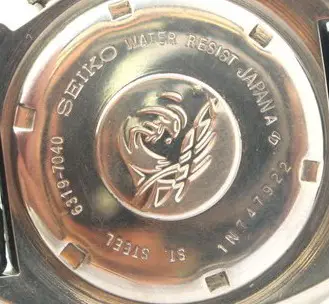
As you can see, the caseback looks like a typical 6309-7040 diver, right down to the “Tsunami” wave symbol. It also has the usual, “Seiko” “Water Resist”, “ST Steel” and “Japan A” markings, including the famous Suwa logo. Nothing suspicious about these markings as genuine 6309 divers also have them stamped on their casebacks. For a fake watch, the quality of the stamping is pretty good.
The strange thing is that it’s marked “6319-7040”, suggesting that it used a 6319 movement. Was this a one-off experimental diver based on the 6319 caliber?
Which leads to another question: was there such thing as a 6319 caliber? Yes, there was but Seiko used the 6319 caliber for their Seiko 5 dress and sports watches, never divers – not any that I know of anyway.
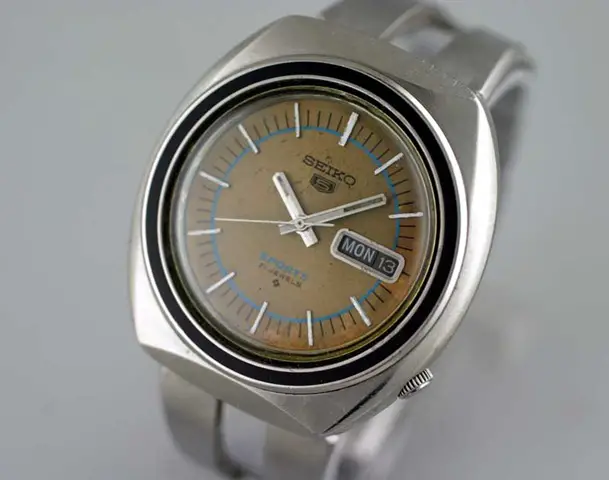
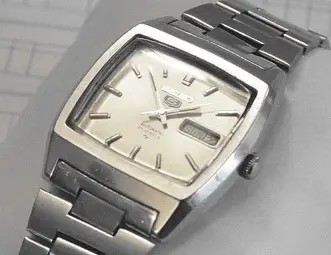
Above: Two Seiko watches using the vintage 6319 movement. Historically, Seiko never used the 6319 in their diver’s models.
Here’s the visual cue that tipped me off that this watch is a total forgery. If you’ve already perused my article on reading Seiko serial numbers, you’ll know that Seiko doesn’t use 8-digit serial numbers. It’s usually six digits and seven digits for old Seikos predating the year 1967.
Well, this “controversial diver” had a total of 8 digits for its serial number. And it begins with “1N”, suggesting that it was from November 1981. Another interesting fact is that the other watch that was auctioned actually had the same 8-digit serial number, also beginning with “1N”.
What are the odds that two very rare Seiko divers have the same serial numbers? One in a million? One in a billion, perhaps? Never!
All genuine Seiko watches have unique serial numbers and no two watches of the same caliber and model can share the same serial number. It is not unusual for counterfeit Seiko producers to stamp the same serial numbers on all their fake products.
Conclusion
After going through all the clues and visible tell-tale signs, I have come to a conclusion that Seiko never made such thing as a 6319-7040 diver. So it’s a fake Seiko diver but a rather convincing one at that.
It might interest you that this watch was sold to the highest bidder for slightly over USD180, which in my opinion, is rather a ridiculously high sum for a fake vintage Seiko diver. You can get genuine vintage 6309-704x divers (with original dials and hands) for USD130 thereabouts.
By no means I am accusing the eBay seller of listing a phony Seiko watch – it’s just that he wasn’t sure if it was a genuine model. Therefore he did caution potential buyers in his listing and described it as a “controversial diver”.
The time-old, sensible advice “caveat emptor” (let the buyer beware) certainly applies when it come to buying mysterious vintage Seikos that you’re not sure about. Do some research into the particular watch that you’re about to bid or buy.
Did the winning bidder know what he was getting into when he won the watch? Well, I don’t really know. He could have thought it was a genuine rare Seiko diver and was determined to win it at all costs. Then again, he may be aware that it’s a fake Seiko diver and wanted it for his private collection. 🙂
Did you enjoy this post? Why not leave a comment below and continue the conversation, or subscribe to my feed and get articles like this delivered automatically to your feed reader.
Comments

Hey Jimmy,
Wow, that IS a long comment! 🙂
We can see a pattern here in which that the so-called 6319-7040 divers were all “made” in November 1981. Sounds like the casebacks were pre-printed with “1N”.
For a fake Seiko diver, this one seems to be quite well made. I do not believe these divers appeared during the 6309 diver era, because the counterfeiter was using a dial design that did not exist until 1996. (I might be on the erring side, but I thought the dial looked more like an SKX007K diver rather than a 7548 quartz).
You mentioned “hi beat” in your comment, were you referring to a 28,800 bph movement? That seems odd because replica makers usually prefer the cheapest way of doing things and high beat movements are usually more costly to make.
Anyway, I would love to see a side-by-side comparison of this fake 6319-7040 diver with an original 6309-7040. Glad you enjoyed this humble write-up. As usual, your comments are always appreciated! 🙂
cheers,
Quartzimodo.


Yes Leon,
If you mean “wrist watch”, it can be verified at a Seiko service center. They may open it up for extra verification if they have to. If the technicians are old enough to remember the 6319 movements, that is. 😉
regards,
Quartzimodo.

I have a 6309 which I bought new in about 1981. It has “6309″ on the right side of the “6? position and it has “-704L T" on the right side of the “6″ position. It recently stopped advancing the date and runs down after only a few hours of non wear. I was told it needed cleaned and that I broke a tooth off the date gear. Can someone recommend a repair place? Is it worth repairing? What should I expect to pay?
Hi Brian,
My sincerest apologies for my late response. You own one of Seiko’s classic divers – the 6309-7040 (or 7049). It’s unlikely that the Seiko USA service center will undertake repairs for long discontinued models in which the spare parts have long dried up decades ago. These days watch technicians prefer to replace parts rather than to repair (it’s easier and less labor intensive).
All’s not lost as there are a few small scale watch repairers in the U.S. that can fix your watch for a reasonable fee. These individuals cater for the niche Seiko enthusiast community and if they cannot repair certain parts, they’ll replace broken components with those salvaged from donor watches with the same movement and/or model. Try looking up Bob Thayer, he has a website for vintage Seiko repairs and modification.
hope this helps and wishing you Happy Holidays!
Quartzimodo.

i have a dive watch that is a seiko. 6309-7040. it has all of what you described above when u spoke about a real dive watch. it has 6 digits for s/n and it does say water150mresist it also has very small words along the inside of it. what should i do with this? where can i sell this or should i use ebay?
Hi Stephanie,
A 6309-7040 diver’s watch is highly collectible and easy to sell, especially if it’s in decent condition (not necessarily mint). You can sell it on eBay or on watch collector forums such as SCTP. Asking prices will range from USD200 to USD700, depending on its originality and condition. Here’s one example that was snapped up for USD800! 🙂
best of luck,
Quartzimodo

I havea Seiko divers 150 h558-5009-331616 I have had this for some time. Don’t remember were I got it? The watch does not work. Does this watch have a battery ? I have seen watches on E Bay for 750.00 + I know I did not pay near that. I really never did not keep correct time. Any help would be helpful THANKS Charles
Hi Charles,
Yes, your Seiko H558-5009 requires a battery to run. The H558 caliber is an analog digital movement and all digital LCDs require power to display digits. If your watch isn’t running, the battery is dead, the movement has become defective or even both. Have the battery replaced first; if your watch won’t run then the movement is your problem.
The H558-5009 is a highly collectible, vintage diver’s watch because Arnold Schwarzenegger (the actor and former Governor of California) actually wore this watch in his memorable action films, Commando (1985) and Predator (1987). If you watch the movies closely, in some scenes you can see Arnold’s H558-5009 on his wrist. Thus this watch earned its nickname, “The Arnie” and that’s why very good condition “Arnies” can fetch over USD750 on eBay.
Quartzimodo

Hi Quartzimodo
This is an interesting thread. I have a Seiko 6309-7040 which has just gone bananas – despite a clean and oil, it still won’t run anything like it should, which leads me to suspect that Seiko used coated pivots – once the coating has worn, it’s had its life.
However, my Seiko has the plastic case ring, and this ring is described in Seiko’s own technical repair publication; I know some had a metal ring, but I doubt that Seiko would have used a metal ring if they could cheapen it with a plastic one! But a case ring isn’t really that critical IMHO, so long as it works, and is genuine Seiko.
This watch also came from the Philippines; it had a replacement dial. The dial lume wasn’t, so I have lumed it as it should be. It was seriously reliable for several years until recently, and doesn’t appear to be badly worn. I’m now looking for a balance assembly, but whether I can find one in the UK, I don’t know. However, I also have a 6309-729X, with a faulty case, so I may use the balance from that. I wonder if anyone could confirm my suspicions re coated pivots? It would save me a lot of tmie if I could find out more!
Regards
Keith

I have a Seiko 6105-8000 I bought in Japan back in early 1969. It’s been in a drawer since “71”. Is it worth anything?
Hi Martin,
You have a highly collectible vintage Seiko divers’s watch there. If yours is in pristine condition and the movement runs since 1971, you can easily sell the watch for at least USD450.
The first generation 6105s are less common than the cushion cased, second generation 6105-811x models and very good condition examples are very rare.
The rarity of the 6105-8000/8009 models are reflected in the ridiculously asking prices of original, new old stock bezels going for USD300 on eBay. And that’s just the bezel alone!
cheers,
Quartzimodo

Great article, thank you. You mention “a well known eBay vintage watch seller from the Philippines”. I had (incorrectly?) assumed that since whenever I searched “Seiko 6309” on eBay they all seemed to be in the Phillipines that they were ALL fake, I figured “What are the odds that every used 6309 for sale on the planet just happens to be ITMOFN?”
Is there a reason why so many are there and so few elsewhere?
I have a genuine 6309-7040, purchased new at the PX in West Berlin Dec.1978. It is really the only watch I have owned since then. I wore a cheap casio for about 6 weeks the first time the 6309 went to COSERV in N.Y. in 1988-89, and went without a watch when it returned there in 1996-97. I do have a fake Rolex I picked up a few years ago in Europe, but I never wear it. I woud like to buy another 6309, or even a pair of them for my sons, but don’t want a fake, so I’d like th lowdown on the association between 6309’s and the PI. Thanks again.
Hi Josey Wales,
You have a great question there. As far as I know, nobody bothered to counterfeit 6309 watches during their heyday and I’ve never seen a “properly faked” 6309-7040. The “6319-7040” is something else; I regard it as an oddity of an imagined Seiko diver’s watch which some third party manufacturer cobbled up together.
A major reason why 6309-704x divers are commonly found in the Philippines has also to do with world history. The U.S. had a centuries-long presence in the Philippines since the Philippine-American War in 1899 and as you know, the Subic Bay served as the U.S. armed forces’ largest naval base in Southeast Asia throughout the WW II and the Vietnam conflict, until it was officially closed in 1991. The 6309-7040 (not the 6309-7049, which is a U.S. market model) was a popular Seiko watch amongst the American servicemen and was easily available through the various PX centers in the Philippines.
I’ve been told that many 6309-7040s belonging to U.S. servicemen ended up being pawned for cash; and that explains the large quantities of 6309-7040 divers being found in the Philippines. This is not counting the 6309-7040s that were sold in that country through official market channels, e.g. watch retailers. The resurgence in interest for 6309-7040 divers spawned a cottage industry which includes scouring the countrysides for unwanted Seiko watches and small-time watchmakers who repair and restore vintage watches. You can thank the various watch forums on the Internet for sparking the rush for used Seiko divers, especially from the Philippines.
Although there are no fake 6309 divers, there are “Franken-Seikos” (Seiko watches cobbled up from parts belonging to other Seiko models) and those with aftermarket hands and dials. Most of the original ones were the first to be grabbed on eBay, leaving many with dials, bezels and hands that are too deteriorated due to age and neglect. Instead of discarding these watches or passing them off as spare parts, savvy eBay sellers source aftermarket dials, hands and bezel inserts to make them more presentable for sale. I’ve seen 6309 divers various aftermarket dial colors, ranging from outrageous purple to yellow but some people don’t seem to mind buying a used 6309 with an offbeat, non-original dial.
I’m lucky to own two 6309s (a 6309-7049 and a 6309-7040); one in its original form (except for the bezel insert, as this part is always the first to deteriorate) and another modified with custom parts from Harold Ng, a.k.a. “Yobokies” in Hong Kong. Finding all-original, almost mint condition 6309 divers today is like looking for a needle in a haystack.
Industrial Watch Works (IWW) commands a premium price for vintage watch restoration, but you get exactly what you pay for – top notch restoration work. There’s also Bob Thayer in the U.S. who does watch restoration at reasonable fees. Check his website out for further information.
BTW, since you purchased your 6309 back in 1978, it’s from the earlier Japan-made batches. 6309-7040s from the mid 1980s were manufactured by Seiko Hong Kong and can be distinguished by the absence of the text “JAPAN” on the dial, just below the 6 o’clock marker. Wear your watch in good health, it has a priceless sentimental value! 🙂
cheers,
Quartzimodo
Also, this 6309 is kinda beat, and I’d like to sink some cash into getting it restored. I have heard Industrial Watchworks does great work but they seem kind of pricey, we are talking about 3x the original cost of the watch for a complete restoration Any advice would be welcome.

Any thoughts on where i might purchase a older 6309 LATE 70 EARLY 80S. Sounds like there are a load of knock offs on eBay. Thanks, Jack.
Hello Jack,
Good question. I assume you’ve already read the primer on buying a 6309 diver’s watch, which was originally authored by my acquaintance and fellow watch enthusiast, Gabe W., a.k.a. “Isthmus”. Then head over to watch trading corners such as the Seiko & Citizen Trading Post, and type “6309-7040” or “6309-7049” and if you’re lucky, you’ll find someone wanting to sell off his 6309 diver. 🙂
AFAIK, there are no “knock off” (counterfeit) 6309 divers being sold, but there is such thing as genuine 6309 divers that are fitted with non-Seiko, aftermarket dials, bezels and hands on eBay. The reason for this is that the watches’ parts have deteriorated badly although the watch case or movement itself is in reasonably good shape and in running condition. Since the original Seiko parts for the 6309 have dried up decades ago, the eBay sellers have no choice but to resort to replacing them with non-Seiko made parts.
Make sure that the seller states clearly if the watch has its original dial, hands, bezel or crown. Honest eBay sellers will describe exactly what parts had been replaced (if they were replaced at all). Avoid those who claim that their 6309-7040 divers are “100% original” but in reality, are fitted with aftermarket parts.
Personally, the only non-original Seiko part that I can accept is the bezel insert, followed by the watch crystal. Since the bezel is the part of the watch that’s the most protruding, it’s the first component to develop scratches and general wear-and-tear. I have to 6309 divers myself, one with an original dial and hands while the other one transformed into a modded 6309, using Yobokies’ custom parts.
good luck in your hunt! 🙂
Quartzimodo

Aloha Quartzimodo Sir:
I am trying to find out how many Cushion cases (Inter- )hange) like the (6309-7040) type, and receive the same (6309A) movements. Could you give me a list of them if on hand Sir. Got another ( 6309 Mov’t ), so want to do something with them.
Thank you Sir ……….. LongBike / @ [email protected]
Hi LongBike,
Seiko only made one cushion cased diver based on the 6309 caliber and it’s the 6309-7040/7049. It was available in only black dial; no other color variation existed. There’s also a well known, cushion cased diver – the 6105-8110/8119 from the early 1970s but is incompatible with the 6309 movement.
Search eBay for 6309-7040 cases for sale; they should be fairly cheap – unless it’s one in absolutely mint condition.
Quartzimodo

Hi Quarzimodo.
I do own one of these 6319 7040. Dial and hands have been replaced, but it doesn’t look fake at all. I do own a few old Seikos and everything on this one looks like a real Seiko. Just like a 6309 7040. I was going to mod. it. But since it seems to be a rare item I will keep it as it is.
Serial IN749104
Hi Thomas,
Thank you for the comments. With all due respect, the serial number itself is an indication that the 6319-7040 is not an authentic Seiko diver’s watch, unlike the 6309-7040. A 7-digit serial number will mean this watch would have been made as early as November 1961 (highly unlikely) and if it is allegedly to have been manufactured on Nov 1971, it would have carried a 6-digit serial number, not 8 digits. Seiko has never used more than 7 digits/characters as the serial number for its watches, period.
Furthermore, the subject of vintage Seiko mechanical divers has been covered in detail by serious collectors long before I started my watch collecting hobby. I have seen scanned catalogs of old Seiko diver’s models and trust me, the “6319-7040” is not among them. I agree with you that you may have a rare item, but whether a rare counterfeit Seiko watch is valuable to anyone else is an arbitrary matter. 🙂
Quartzimodo.

G’Day quartzimodo,
You may be interested that the watch in question is listed on ebay again.
There is a very interesting pic of the movement which has had some info ground off.
Here is the site:
www.ebay.com.au/itm/CONTROVERSIAL-SEIKO-6319-7040-DAYDATE-STAINLESS-STEEL-AUTOMATIC-MENS-DIVER-WATCH-/301694775856?pt=LH_DefaultDomain_0&hash=item463e68f230
CONTROVERSIAL SEIKO 6319-7040 DAYDATE STAINLESS STEEL AUTOMATIC MENS DIVER WATCH
| Add to watch list
Seller information
badingski (8364 ) About badingski
99.4% Positive feedback
Follow this seller
Visit store: badingski
See other items
AdChoice
Item condition:Pre-Owned
Time left: Time left:21h 39m 17s (31 Jul, 2015 10:30:11 AEST)
Current bid:US $113.50
Approximately AU $155.54
[ 8 bids ]
Place bid
Enter US $116.00 or more
Add to watch list
Add to collection
G’day Frank,
Thank you for the interesting piece of news. Actually Seiko has never made anything like the “6319-7040” and everything about it points that it’s a fake Seiko diver’s watch. Whoever duplicated the original 6309-7040 failed to pay attention to detail, starting with the serial number.
Seiko has NEVER used as many as 8 digits in the serial number for its timepieces made after April 1971, but adhered to their standard 6-digit numbering system to this very day. The fact that the “6319-7040” diver was imprinted with an 8-digit serial number is the only proof you need that this watch is hardly controversial, but an outright fake.
Quartzimodo.

I have a 6039-7049. I believe the watch to be original as everything seems to check out. One question I do have is about the lume. It still shows in the dark but faintly. Is this normal or should it not glow at all due to age?
Thanks
Hi Mike H,
That’s a good question. Seiko didn’t invent their proprietary LumiBrite compound until the 1990s and used, Promethium-147 compound to excite the zinc phosphor material which lights up when “charged” with strong light. It is quite normal for Seiko watches made in the 80s to use Pm-147, which is a very mild and “safe” radioactive isotope. Unfortunately Pm-147 doesn’t glow as bright as the LumiBrite Type A, which Seiko originally used for its diver’s watches (beginning with the “Monster” series”).
Therefore it is perfectly normal for aged Pm-147 based lume to leave a faint glow in the dark. Your watch probably had a stronger glow when it was new. 🙂
Quartzimodo

Loved this article!!
There’s another one for sale on eBay now.
www.ebay.com/itm/SEIKO-SCUBA-DIVER-S-6319-7040-PARA-HOMBRE-WR150M-/252502560298
Some pics on Google and different articles show Diver’s 200m, and some Diver’s 150m.
That’s another clue that it’s a fake.
The same model watch can’t be 200m and 150m water resistant.
Also, I have a few questions, if you don’t mind.
First, what other movements could be used in the 6309-704X?
I have one, from one of the eBay sellers. It’s been restored. Lots of aftermarket parts. I still need to open it and see what’s inside. It’s at the shop right now to be serviced. I’ll go check.
Doesn’t run that well. Stops a lot. I’m thinking of using a 6306 movement. Or even the 6319 or the 6349.
But, is this 6349 that rare?
Looking through eBay, almost all watches with this movement are from India. And that seems a little shady…
Should I buy one of these watches as a donor for one 6309 diver?
Also, another topic….
I see some see through case backs on eBay, that fit the SKX007/009, and says it might fit the 6309-7040 too.
Are their case backs interchangeable?
I’d appreciate if you could shed a light on these questions.
Thank you!
Hi Marcelo,
That is correct. There never were any mainstream Seiko divers with a 200m water resistant rating until the second generation 7002-703x models came out in the early 1990s. Prior to the 200m rated 7002-703x models, Seiko only made 150m and 300m rated models, like the very rare 6159-7001 Professional 300m. All 6309 diver watches are 150m rated.
If your watch “stops” frequently, note the position of the watch second hand and the minute hand when it stops. If the sweep second hand aligns with the minute hand, there’s a possibility that the clearance between the two hands are too little that they come in contact with one another. Therefore the minute hand causes the second hand to stop due to friction. I have a Seiko SKZ327K “Stargate” that does this and it’s been like that since I bought it six years ago. 🙁
You can substitute any Seiko automatic movement for your 6309-7040 diver as long as their dial feet, crown and calendar aperture lines up properly and that the mechanism fits into the case. The 7s26 caliber, having its crown at 3:45 instead of 4 o’clock obviously won’t fit any 6309 watch. The 6306 was a limited release caliber with a hacking crown; and watches based on the 6306 were exclusively confined to the Japan market. It should fit the 6309-7040 but the question is finding a donor Seiko 6306 watch that’s affordable. 🙁
You can use the 6349 or 6319 instead of a 6309 if you’re able to find a 6349 or 6319 movement. The 6349 is a 23 jewel version of the 17-jeweled 6309, while the 6319 has 21 jewels. They all share many common parts with one another, including the oscillating weight and the dial holding ring. I would NOT recommend buying donor watches from India as the watch repairers there have been known to cobble together parts that are not native to the caliber. Genuine parts were expensive and hard to obtain, so many of them resort to going the “MacGyver” route. 🙂
The 6349 is a rare movement but it’s not necessarily valuable like the 6306, which has a hacking feature.
Cheap, non-diver Seiko 6309 watches are plentiful on eBay therefore I would advise you to get one in a solid running condition (the exterior watch condition doesn’t matter). As for the aftermarket casebacks for the 7s26-0020 watches that are claimed to fit 6309-7040x divers, that’s a risk that you have to take unless the seller provides an unconditional return policy should the caseback doesn’t screw in properly.
hope this helps,
Quartzimodo
Thank you! That was a great help!
I was looking at some Actus and Silver Wave 6306 watches. I read in one forum that they do fit the 6309-704X. And one guy did just that, instead of buying the 6306 diver for over $1K.
But the ones I found are only with the crown at 3 o’çlock.
I hope it can be placed inside the turtle casing.
Instead of going with a more modern movement, I’ll try the 6306 for now. Then, I’ll have the same $1K watch.
The movement on mine is not bad. It does work. It just stops sometimes, randomly. Not in any certain position. It’s not friction on the hands. Sometimes it works for over 24 hours. I just need to get it going.
I’m pretty sure it just needs to be serviced.
I’ll also change the crystal. It looks weird.
The guy I took it last week said it’s not plastic, but normal glass. But when I see a reflection from some light source, it looks wavy. Not straight like my H558 I was comparing it to.
Someday I’ll buy one just to have it gold plated. I saw one slim case for sale like that, and it was pretty interesting.
Maybe a blue or dark red dial would look great on this mod.
But right now I have other things in mind.
Thanks for the help. I really appreciate!
Hi Marcelo,
Sorry that I couldn’t reply to your comment regarding the 6306 movement for sale as my broadband was suffering from connection problems several hours after your additional posts. 🙁
Actually, it does not matter where the donor watch’s crown position is so long as the caliber is compatible with your 6309. If it’s a 6306 for example, Seiko makes only one version of this movement regardless whether the watch case has the crown opening at the 3 o’clock or the 4 o’clock position. 🙂
That goes for other calibers like the well known 6138 chronograph. If you’ve seen pictures of the 6138-0040 “Bullhead” for example (I happen to have one), notice that the main crown sits at the 12 o’clock position instead of the “usual” 3 o’clock position found in other 6138 models. In addition the stopwatch pushers are also shifted to 11 and 1 o’clock respectively.
Because the movement is rotated 90 degrees anti-clockwise, the chronograph’s subdials and day/date window had to be redesigned so that they face the wearer properly. With a 6138-0030 for instance, the sub-dial registers are aligned vertically with the elapsed hour register being at the bottom while the elapsed minute counter at the top of the dial. Since the 6138-0040 was designed to resemble a mechanical stopwatch, the hour and minute registers also shifted to the 9 o’clock and 3 o’clock positions respectively. The day/date calendar is now at the 6 o’clock position and the wearer will read the day and date vertically instead of horizontally. Of special interest, the day calendar disc had to be printed vertically too.
Therefore if you have a 6138-0040 and you need a movement transplant, it need not be sourced from an actual 6138-0040 Bullhead when any 6138 model will do fine. 🙂
Replacing a movement with that from another Seiko caliber platform will only become a problem if it’s from a totally different series. A 7s26 or 7009 type movement won’t fit into any 6309 watch that I know of, but a 63xx movement should be able to substitute for the 6309. The reason why 6306-700x divers are very expensive is because they are considered as a collector’s item. You’re buying the watch as it is (a 6306-7001) diver rather than a generic Seiko watch that happens to have a 6306 movement.
Since you’ve established that your watch doesn’t stop at a fixed time intervals, it’s probably your main spring that is sticking in some places as it unravels or unwinds. I’m not sure if watch repairers are willing to replace just the main spring these days as it’s simpler (and cheaper) for them to have the entire movement changed.
BTW, if you want to win an item on eBay badly, I would recommend you to use eBay sniping tools for these reasons. 🙂
best of luck,
Quartzimodo
Sorry to bother you so much, but what do you think of this movement? Will it fit?
i.ebayimg.com/images/g/g9cAAOSwtnpXjARc/s-l1600.jpg

Thanks much. This stuff is fascinating. On a personal note, I purchased a Seiko Divers 150m, 7548 700H, orange face, some time ago, but I’m not certain exactly when. Serial no. 860341. Is that enough to find its age?
Hi Richard Kvies,
Wow, you have a rare bird there sir. The Seiko “SQ” 7548-700H is not only a collector’s item; the fact that it has the orange dial makes it an extra desirable vintage Seiko diver’s watch. 🙂
The 7548 quartz movement came out towards the late 1970s and found its way into Seiko’s diver lineup. The earliest examples of the 7548-800H that I’ve seen in pictures, are from the year 1978 but I don’t know the exact year this particular model was discontinued. You can determine the actual year your watch was made by looking at the sequential year numbers that are stamped on the caseback. These numbers are stamped in a circular fashion following the circumference of the back case after the text “BATTERY CHANGE”.
Now, the 7548 movement has a battery life of 3 years. To help the owner remember when the original battery was fitted at the factory, Seiko would stamp a series of numbers representing the years and make a tiny indentation mark to the nearest year. This indicates the year of the next anticipated battery change since the watch was manufactured for the following 10 years. Note that there are three vertical lines between the years and they represent the first, second and third quarters of the year.
To verify that your watch was indeed made in June 1978, the battery change years should start at 81, 82, 83, 84…up to the year 90. Since your watch was likely to have been made in 1978, the first battery change mark would be at the year 81 (1978 + 3 = 1981).
The whole idea behind this is to remind the watch owner (should he actually use the watch for real scuba diving) when the next battery change is due. This is perhaps, on condition that the owner sends the watch to the official Seiko service center for battery replacement. The watch technician would then physically mark the year and the yearly quarter when that battery is again due for a change on the watch caseback.
Seiko’s practice of stamping the battery change marks continues to this day but it applies only to their quartz diver’s watches without additional complications such as a chronograph or an alarm function. I suspect this is because it’s easy to anticipate the end of the battery life since the battery consumption of simple quartz movements is fairly consistent.
Seiko diver’s watches that are of the Kinetic or Solar powered type, don’t come with the battery change marks. The simple reason for this is because they are fitted with rechargeable lithium ion cells and the true lifespan of such batteries are difficult to predict. 🙂
hope this helps,
Quartzimodo.

In your article, you mention that no watches were marked “Divers 150m”.
Not quite true. My watch is marked “DIVERS 150M”.
This is an original 7548-700B “Pepsi”, which my wife purchased for me from a Seiko dealer in San Diego in either 1985 or 1986. Might have been 1984.
Serial is 6 digits beginning with 440
Battery change starts with some index marks, then 1987. Battery changes were originally done at a different Seiko dealer.
This has the English and *French* Day window. I’m guessing this was North American (US and Canada) version
Hi Tom,
Your statement is also true, but when I wrote the article I was inferring mechanical Seiko divers’ watches as I gave the example of the early 62MAS diver’s to the 7002 based diver’s models. You have a 7548 quartz diver with the “SQ” logo below the hands and it does say “SQ” and “Diver’s 150m” instead.
Thanks for pointing that out, I will edit my post to make it clearer that Seiko quartz divers with the “SQ” text would be the exception to the rule. 🙂
BTW, your watch was definitely manufactured in April 1984.
cheers,
Quartzimodo Admin.

Hello Quartzimodo,
It’s been a long time my friend.
Well when I referred to a fine running Hi Beat 21 jewel movement, all I mean was that my movement had a glide and slow motion sweep of the seconds hand, much like a Hi beat Seiko caliber would appear.
Please contact me when you have time at my Gmail address, so we can catch up.
Cheers, Jimmy

I retired here to the Philippines around 16 years ago and have been fortunate to have bought around 15 pcs of 6309-7040 ( 4 were 729x)and there are still quite a few to dig out of the country-side. During the Vietnam war, the P.I. was the #1 choice for R&R, and of course there was Subic, Clark, and Camp John Hay up here in Baguio City where I live. ALL of the PX’s carried the 6105 and later the 6309. The Seiko Diver watch was probably the most popular watch worn by military at that time, as well. I have over the years bought 3 of the 6319-7040 Divers and still have a near Mint example SN# 1N747494. Everything matches up. The movement is a 21J
A6319 Seiko Movement that runs beautifully. The date wheel is in Arabic and English. I first read your write-up on the “Controversial” diver in 2011. I Think I was the seller of that watch. The one thing that was never made clear was WHO made them,how many were made, and WHERE they were made. I have been told that they were made in Taiwan,and that after a big row with Seiko “Cease and desist” order, production was halted at around 150-200 pcs, but who knows. I have been offered $600.to sell mine, so they appear to be picking up steam from collectors. Happy to send pics of mine if you want. BTW, I did 2 tours in Vietnam from 65-68 with the Marines. Semper Fi.


Hello Quartzimodo,
I just happened to run across this article by you, while I was doing research on a watch that I just recieved from a very good friend of mine from California.
The watch I have is the very same 6319-7040 being elaborated upon here & your site was the fist site to pop up on google & I was pleased that this information is well posted.
To be honest while looking at this watch, my good friend Quentin R. told me ahead of time that many back & forth posts have been discussed about this very watch & that many have said these are fake watches, but by looking at the watch it sure appeared real to me as well.
I have gained alot of good information by your blog on this one & will check other sources for my research before I get back to you with my opinions.
My serial number is almost the same as the one you show in the photo, but slightly different & reads: 1N747968.
In checking the case which as you said looks so much like a standard 6309 diver case we all know, this case does have some different attributes near the crown cutout and therefore is a totally different case than the 6309-704X case.
The movement seems like a authentic fine running Hi-Beat 21 jewel movement, but also has some play & flaws in adjusting the hands to set the time, in that the day/date wheel also cycles while doing so. The language is only in English & no second language exist on the day/date wheel. The dial font is well done & the standard feiko identifyers are not evident regarding how to spot a fake dial., of which I have done a few post on this subject on the SCWF & OSWF.
The day/date window is beveled, the letters in the Seiko font are correct with the right angles, the lower dial code font is below the seven to five o’clock markers & read: Made In Japan 6319-7040 matching the caseback & the movement caliber.
The hands are of the similar style of the 7548 and others with a flat forged chrome style with very good lume.
The movement has a plastic movement spacer as opposed to the metal spacer ring in the 6309-704X divers. The day/date wheels are black and have the additional miniature letters and numbers that one see’s when cycling the wheels in between switching days & hours which denote authentic wheels.
~ In conclusion, I have no idea why a watch of lower value would ever be faked, as it would take considerable money to set up the machinery and tooling not too mention raw parts costs, in order to sell a few hundred to a few thousand watches at best.
But I also have caught the investigative bug with this one, and intend on searching this out till it yeilds a concrete answer as to the validity of this watch or not.
Thanks for your excellent article my friend,
Jimmy
(Poseidon-Jim)